Since 1975
Half a century with the presa dog
The story of Irema Curtó is the story of a man who searched the islands for a dog that no longer existed, gave it the name of a breed, and has bred it, written about it and defended it ever since, without telling fairy tales about where it came from.
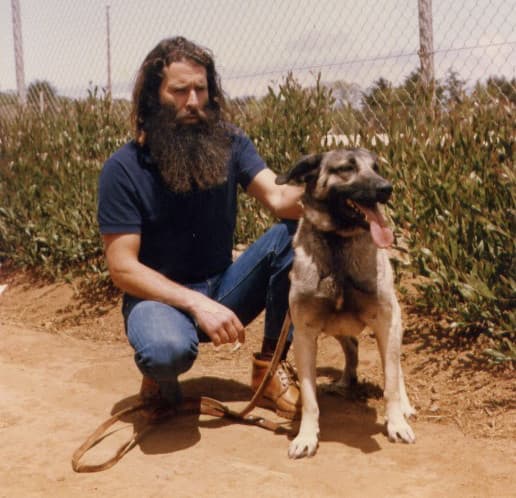
The founder
Manuel Curtó Gracia
A Catalan from Lleida, he arrived in the Canary Islands in 1968. In the early 1970s he began searching the whole archipelago for presa dogs, “from village to village, from house to house, from man to man”, and found that none were left: only recent crossbreds of Bulldog, Great Dane or Boxer.
He did not only breed it. He researched it and wrote it down. He interviewed the old fighting men and cattle drovers, read the island council records, and wrote for years in El Día, El Mundo del Perro and Canidapresa. In 1976 he left his job to breed and train dogs.
“It is from my first writings that people began to speak of these dogs as if they were a breed.”
— Manuel Curtó Gracia · p. 473
Our history
From an extinct dog to a breed
Every date comes from Manuel Curtó Gracia’s book, with its page in brackets. The continuity of a line that was not improvised.

- 1968
A Catalan in the Canaries
Manuel Curtó Gracia, from Lleida, arrives in Tenerife by sea from Barcelona, newly married to a Canarian. His father-in-law, who had served in Fuerteventura, tells him about the Majorero dogs (pp. 457-458).
- 1974–75
The search, and the affix
He goes from village to village across the islands looking for the presa dogs the old men talked about, and finds none left (p. 13). On 4 November 1975 the RSCE recognises his affix, Irema Curtó, as no. 896 (p. 473).
- 1977
The first litter
The first litter is born from Boby, bought in Arucas, and Piba, saved from dying under a box in Las Tres Palmas. We have bred without a break ever since (pp. 295-296, 473).
- 1977–80
The first standard
He measures Boby and Piba with a tailor’s tape and writes a first draft standard; the Tenerife club will later build its own on it (pp. 459-460).
- 1982
In the press
He publishes “Perros de presa canarios” in El Día. His articles on the crosses being hidden open “the most talked-about controversy” ever to surround a dog breed (pp. 14, 67).
- 1989
Breed recognised
The RSCE recognises the Presa Canario. Curtó criticises the official standard and, with the clubs of both provinces, writes a modified standard that accepts the black coat (pp. 193, 221-222).
- 1991
The book
He publishes “El Perro de Presa Canario, su verdadero origen”, a collection of his articles, letters and interviews (pp. 6, 14).
- 2001
Presa, not Dogo
The FCI recognises the “Dogo Canario”, with another name and another standard. Irema Curtó leaves the official system to keep breeding the traditional Presa Canario (pp. 379-382).
- 2024
Second edition
Manuel Curtó Jr., his son, publishes the second edition of the book (pp. 6-7).
The claim
Presa, not Dogo
In 1998 the official club agreed to call its dog Dogo Canario, and in 2001 the FCI recognised it under that name with a new standard. “I did everything I could to stop such nonsense from happening”, Curtó writes (pp. 379-381).
In the Canaries, perro de presa is the people’s word, centuries old; dogo “means nothing here in the islands” (p. 374). That is why Irema Curtó left the official system to keep breeding the traditional Presa Canario, with all its coats, black included (p. 382). In 2003 the United Kennel Club in the USA recognised the Presa Canario (p. 377).
“The Presa is the Canarian breed, just as the Fila is the quintessential dog of Brazil.”
Manuel Curtó Gracia · p. 374
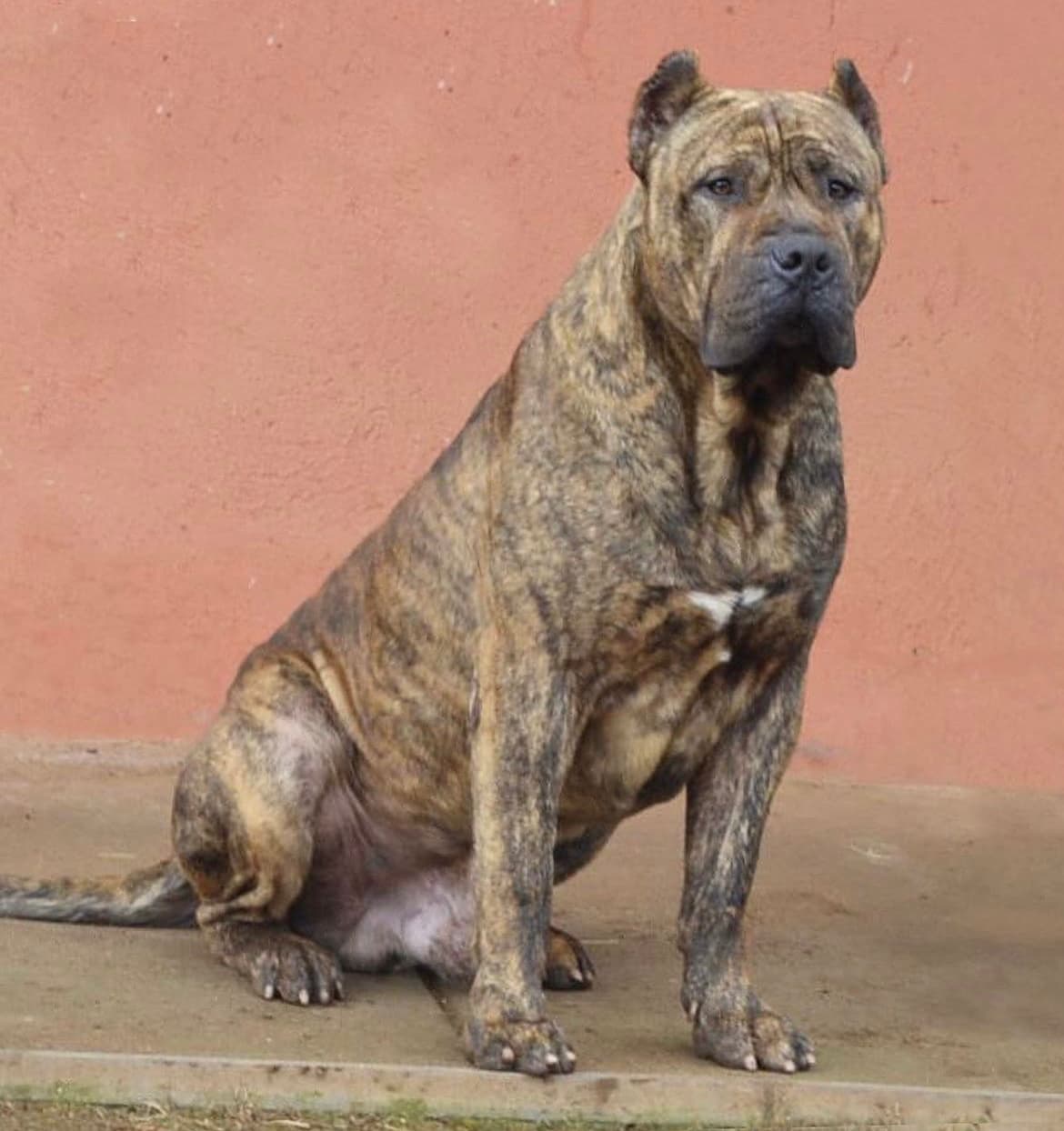
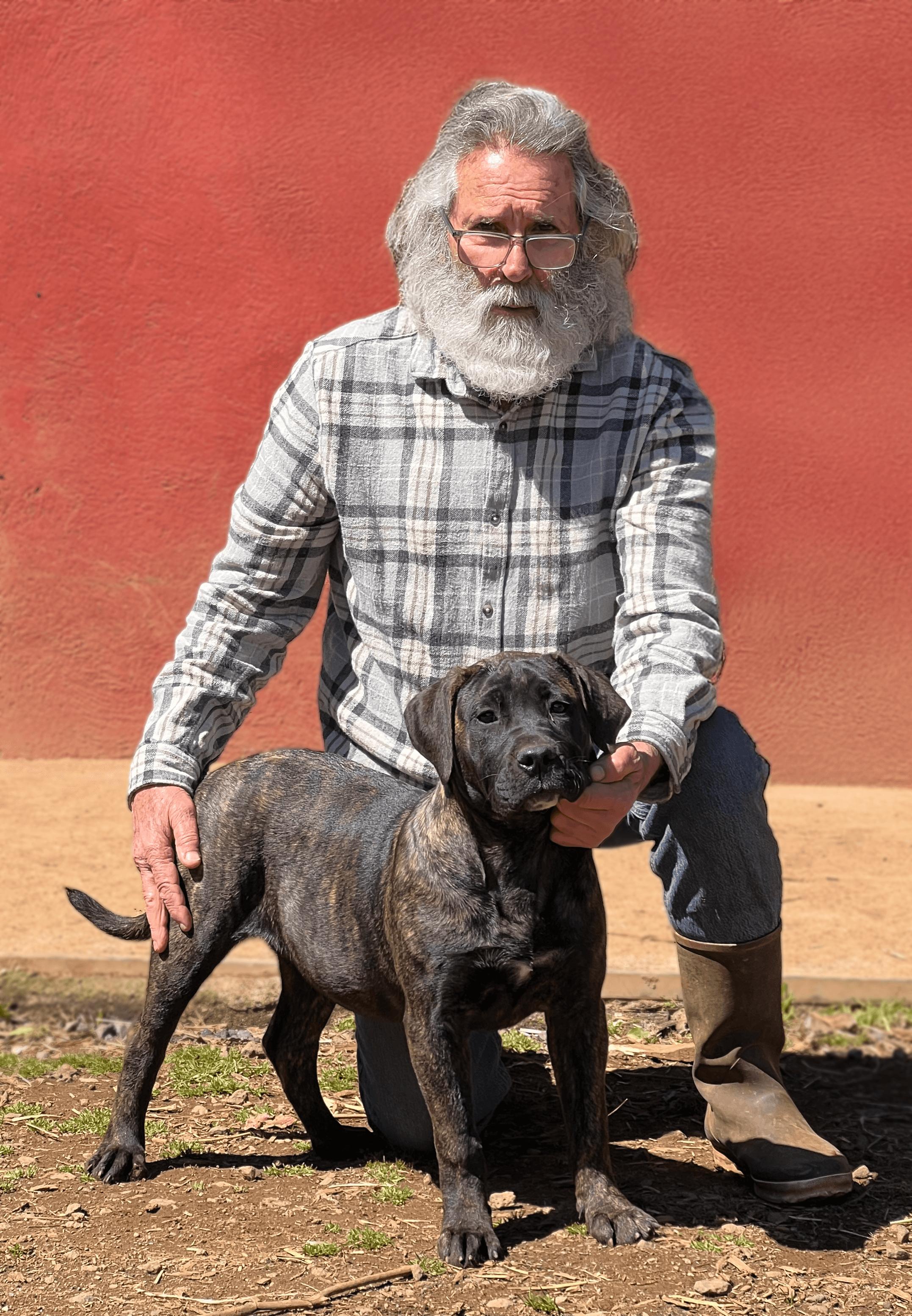
The work
The true origin, in writing
El Perro de Presa Canario, su verdadero origen (1991, second edition 2024) is not an ordinary dog book: it collects the articles, letters and interviews in which Manuel Curtó told the story of the breed as it was being born, controversies and names included (p. 14).
We do not tell the history of the breed from the outside. We wrote it while it was happening, generation after generation.
“A breed can be lost in less than twenty years, if people lose interest. That is what happened to the presa canario.”
— Manuel Curtó Gracia · p. 63